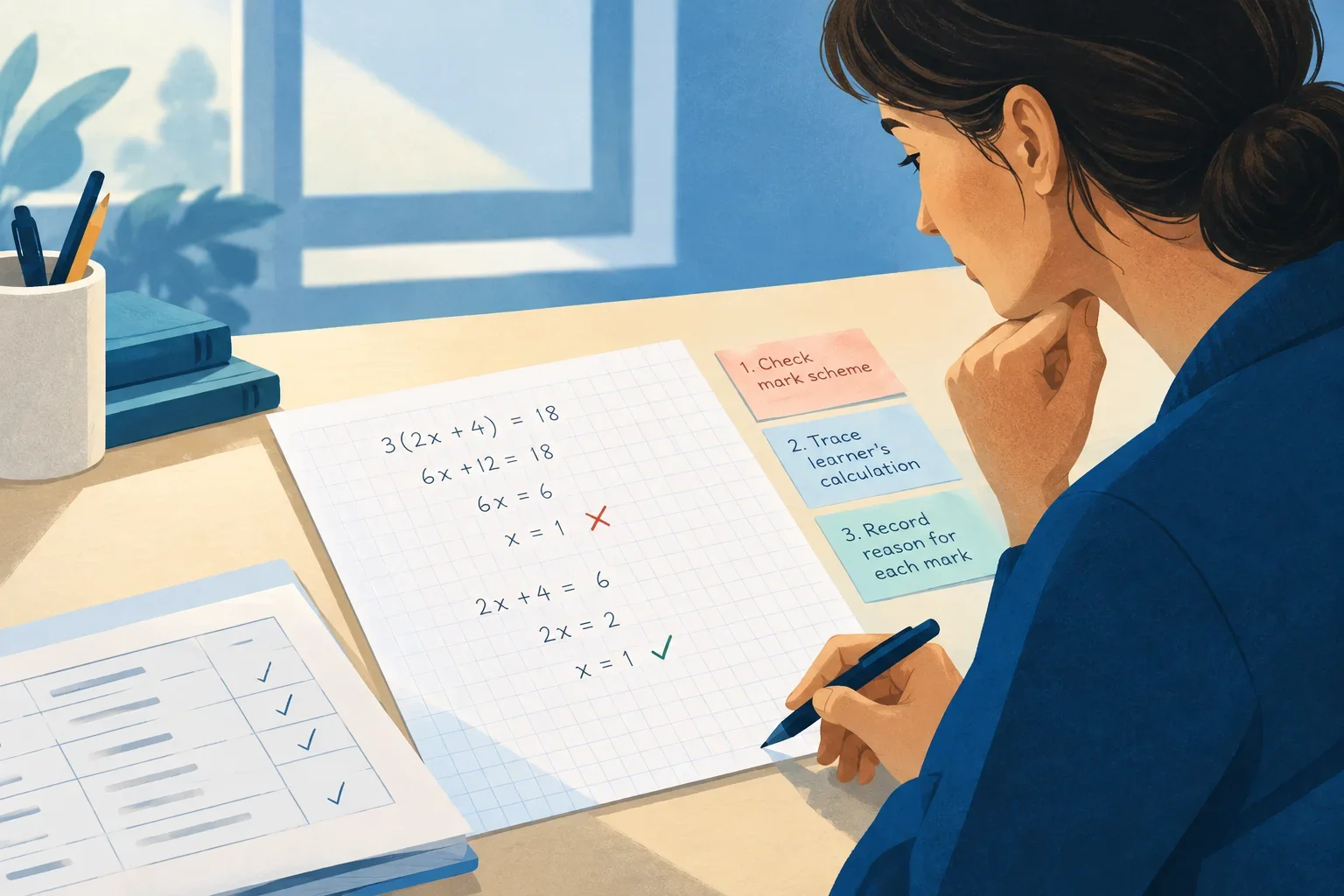
Record what the learner submitted, distinguish missing evidence from an answer that falls short, and check the assessment rules before deciding what happens next.
A rare workplace event does not automatically make simulation acceptable. Check the assessment rules first, then plan realistic conditions and record what the evidence can show.
An unexpected response pattern is a reason to check a quiz question, not proof that it is faulty. Use a fictional example and a practical review routine.
Preserve the version learners received, identify who may be affected and escalate the issue before agreeing a remedy. Includes a fictional example and reusable incident log.
Revisit earlier learning through brief, ungraded tasks. Use a fictional business example, model answers and a planning table without collecting another assignment.
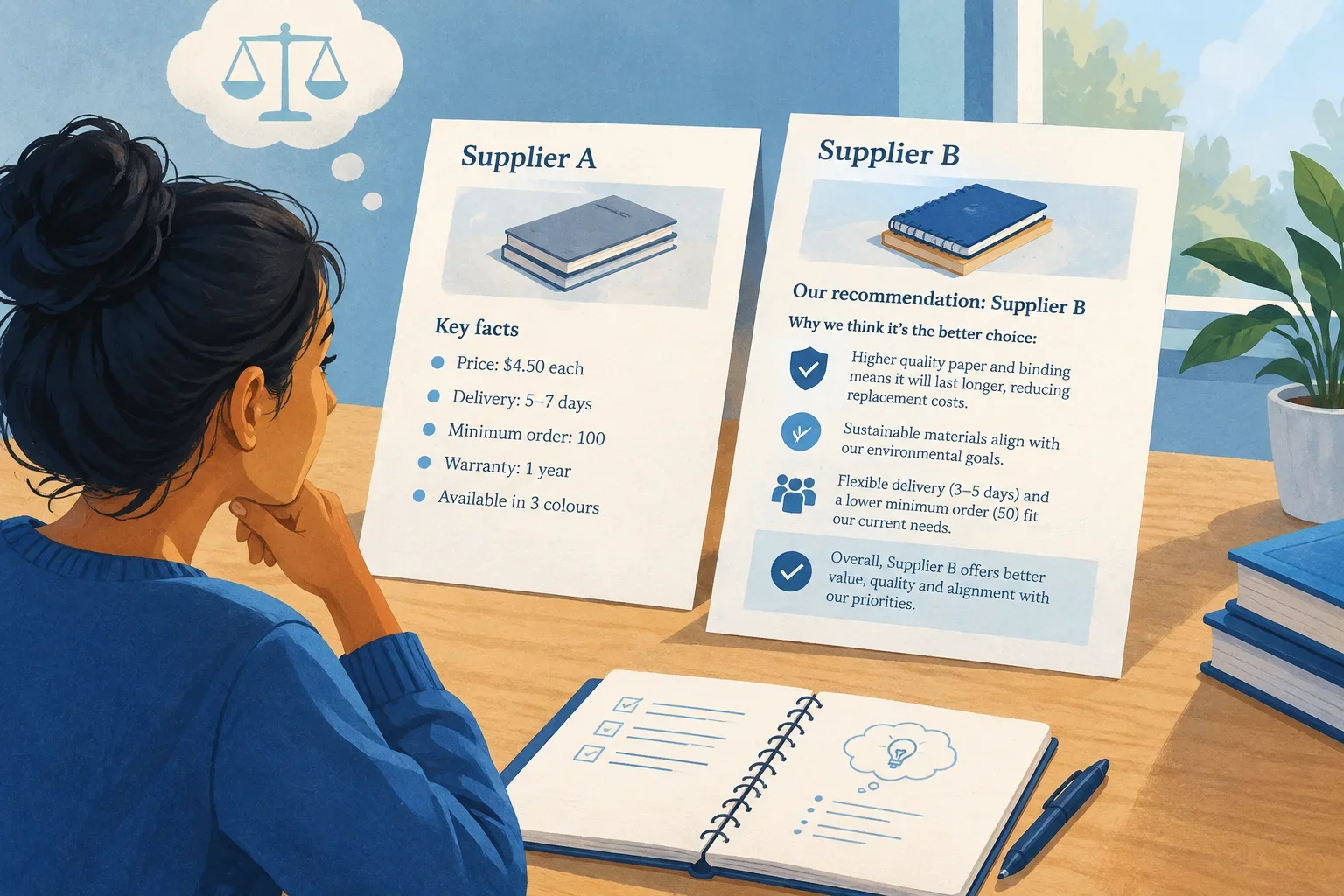
Use two fictional supplier recommendations to explore the difference between listing facts and justifying a choice, then help learners review their own reasoning.
Record what the learner demonstrated, how well they performed and any help they received. Use a fictional role-play and adaptable table to make your judgement reviewable.